
New flooring installed over a bad subfloor is money spent twice. The new floor will look right for a while and then start telling you the same thing the old one was telling you, because nothing underneath it changed.
Most of the warning signs are things people have stopped noticing. Here is what to look for before anyone quotes your job.
1. A spot that gives underfoot
Stand in the middle of a span between joists and rock your weight. A floor that flexes noticeably, or that feels softer in one place than another, has a problem below it — deteriorated sheathing, joists spaced wider than the sheathing thickness supports, or old water damage.
Kitchens near dishwashers, bathrooms around toilets and anywhere near an exterior door are the usual places.
2. Squeaks that have a location
An old house makes noise. A squeak that happens in exactly one spot, every time, is different: it is two pieces of wood moving against each other or against a nail that has worked loose.
If it is a loose fastener, it is a straightforward fix while the floor is up and a permanent annoyance once the new floor is over it.
3. A slope you have stopped seeing
Put a marble down. Better, put a four-foot level on the floor in several directions and look at the gap underneath.
Some settlement is normal in an older Licking County house and it is not necessarily structural. It matters because floating floors have a flatness tolerance, and beyond it the planks flex at every high point until the locking edges wear and the seams separate.
Thin luxury vinyl plank is the least forgiving of all. It follows the dips exactly, and it is very visible in raking light from a window.
4. Gaps opening at the baseboard
If the gap between your floor and the baseboard has grown, something is moving. A floor that has shrunk seasonally is one explanation. A subfloor pulling away from its fasteners is another, and it is the one worth investigating.
5. Any smell of damp
A musty smell in a room with no obvious source usually means moisture where it should not be. Under a floor, moisture does not leave on its own.
Do not install over it. Find it first — a supply line, a failed seal, groundwater, a slab without a vapour barrier. New flooring over active moisture is a warranty claim waiting to be denied.
6. Tiles that crack or grout that keeps failing
Existing tile that cracks in a line, or grout that reopens every time it is repaired, is telling you the substrate under it is moving. Tile is rigid and unforgiving; it fails before anything else does, which makes it a useful early warning.
7. Layers, and then more layers
Old houses accumulate flooring. It is common to pull up carpet and find vinyl, and under the vinyl a layer of plywood underlayment, and under that the original boards.
Every layer changes the finished height, which affects door clearances, appliance heights and every threshold in the house. Sometimes layers can stay. Sometimes they have to come out. That is a decision to make with the floor open, and it belongs in the quote rather than in a phone call halfway through the job.
What subfloor work usually involves
Not much of this is dramatic, and most of it is a day rather than a week:
- Re-fastening loose sheathing to the joists with screws rather than nails
- Cutting out and replacing damaged sections of sheathing
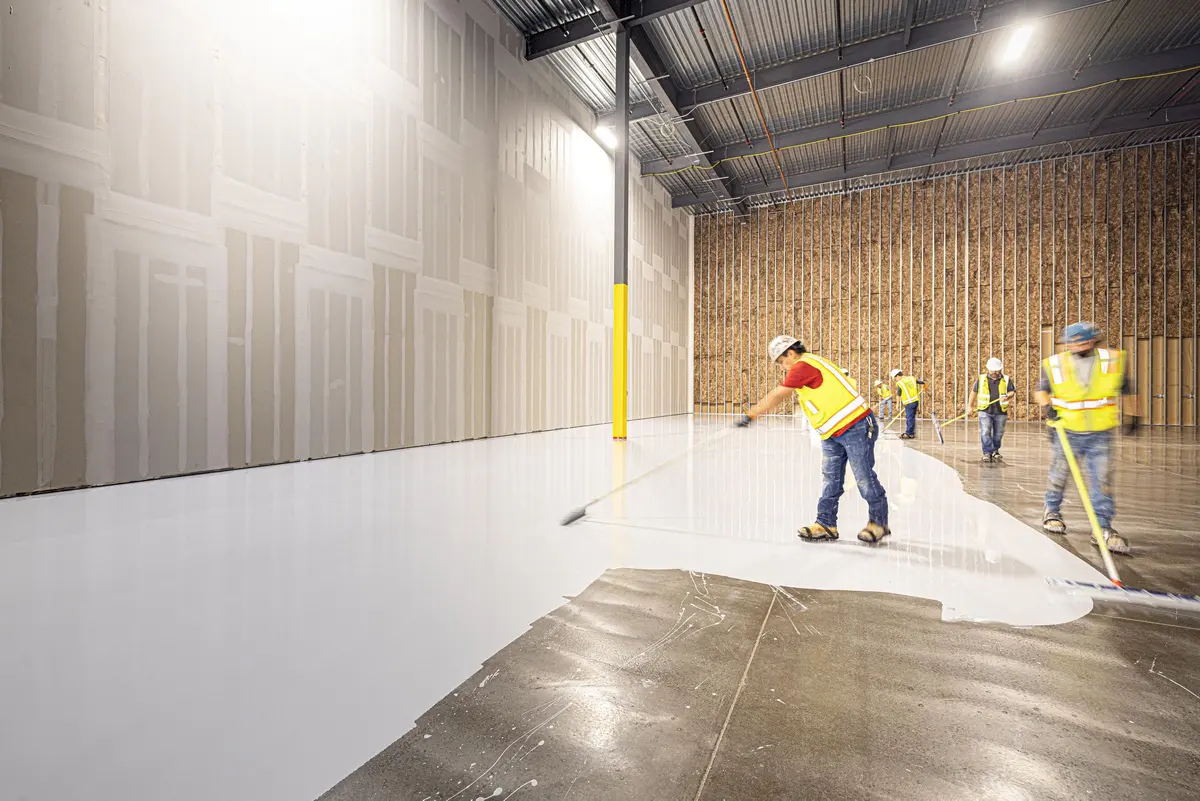
- Self-levelling compound over low areas on concrete, or a skim over a wood subfloor
- Adding a layer of underlayment where the existing sheathing is too thin for the new floor
- Sistering a joist where one has been notched or damaged, which is the one item that is genuinely structural
Why we look before we quote
We could quote your floor over the phone. It would be a guess, and the number would change the day the old floor came up, which helps nobody.
Instead we come out, look at what is there, and where we can we lift a vent or a threshold to see what is underneath. Subfloor preparation is part of a Highmark proposal rather than a discovery made after the crew has arrived, and that is only possible if we have actually looked.
If you have noticed any of the seven above, mention it when you book. It tells us what to bring and what to expect.