Most people who want to stay in their own home as they get older start by thinking about grab bars and stair rails. The floor deserves the same attention. It is the surface every step lands on, and the details that hardly matter at forty, such as a raised threshold, a loose rug or a slick finish, matter a great deal at eighty.
Whether you are planning ahead for yourself or making a parent's house easier to live in, this guide covers what makes a floor safer and more comfortable for older adults, and which materials do the job best.
What a floor needs to do
- Stay level: no lips, raised thresholds or height changes between rooms to catch a toe or a walker
- Grip: a surface that is not slippery in socks, slippers or when a little wet
- Roll: firm enough for a walker, a rollator or a wheelchair to move across without dragging
- Be easy to see: clear contrast at edges and steps, and no patterns that confuse depth
- Be comfortable: warm and forgiving enough to stand on, and quiet
- Be easy to clean: without getting down on hands and knees or mopping with buckets of water
No single material is best at all of these, but some come much closer than others.
Luxury vinyl plank: the best all-round choice
For kitchens, living areas, hallways and the main floor generally, luxury vinyl plank is what we recommend most often for aging in place.
- It can run continuously through most of a level, which removes most of the transitions between rooms
- A matte, textured surface gives good grip and does not glare under bright lights
- It is firm and smooth enough for walkers and wheelchairs to roll easily
- It is waterproof as a plank and cleans with a damp mop, so spills in the kitchen are a quick job
Choose a rigid-core plank with a thicker wear layer where wheels and walkers will travel, and a textured, low-sheen surface rather than a smooth, glossy one. How to choose luxury vinyl plank explains the wear layer and core, and waterproof versus water-resistant flooring covers what waterproof does and does not mean.
Carpet: soft and warm, if it is the right carpet
Carpet is the most comfortable floor to stand and walk on, the warmest, and the quietest, and many people want it in the bedroom. It can work well for aging in place, with the right specification:
- Low, dense pile. A tight, low-profile cut pile or a dense textured carpet. Deep plush and shag carpets make feet, walker legs and wheels drag
- A thin, firm pad. A thick, soft pad lets walkers sink and makes the floor feel unsteady. The same dense, firm cushion we recommend for stairs works here. Our carpet padding guide explains density and thickness
- Stretched tight. A carpet that ripples is a trip hazard, and it is a sign the carpet needs restretching. How to care for carpet covers why it happens
If someone in the house already uses a wheelchair, a hard surface is usually the better choice, even in the bedroom. Carpet is harder to roll across and wears quickly under wheels. How to choose carpet covers pile styles and fibers.
Laminate and hardwood: workable, with care
Both can be good aging-in-place floors. Both roll well and are easy to keep clean with a dry mop. The things to watch:
- Finish: a high-gloss finish can be slippery in socks and creates glare. Choose matte or low-sheen
- Water: laminate is not the right choice in a kitchen or anywhere water may be left on the floor for a while, because it can swell at the seams. How to clean laminate floors explains why
- Sound: hard floors are louder, which can matter to anyone who uses hearing aids. A good underlayment and some soft furnishings help
Transitions: where most trips happen
The place a floor changes from one material or height to another is where toes, slippers and walker legs catch. In planning an aging-in-place floor, the transitions deserve as much thought as the material.
- Fewer of them. Running one floor through the kitchen, hallway and living areas removes most of the changes between rooms. How floors run between rooms covers when to keep the floor continuous
- Flush or gently ramped. Where two floors of different heights meet, the transition should be as flat as possible, with a reducer that ramps gradually rather than a lip
- Carpet edges finished. Where carpet meets a hard floor, the edge should be secured with a proper transition so it cannot lift
We check the floor heights in every doorway at the in-home appointment, because a height difference is far easier to plan around before installation than to fix after it.
Rugs are the biggest risk
Loose area rugs, throw rugs and the curled corners of runners are one of the most common trip hazards in any home. If a room needs a rug, choose a low-profile one, put it on a non-slip rug pad sized to it, and make sure the edges lie flat. In a hallway or on a path that someone uses at night, consider going without a rug altogether.
Stairs and contrast
Stairs are where the floor matters most, and where vision matters most too. As eyesight changes, it gets harder to judge where one step ends and the next begins.
- Contrast at the edge. A stair nose that is visibly different from the tread, or a contrasting strip at each edge, makes each step easier to see
- Avoid busy patterns on stairs and in hallways. Strong patterns can make steps and changes in level harder to judge
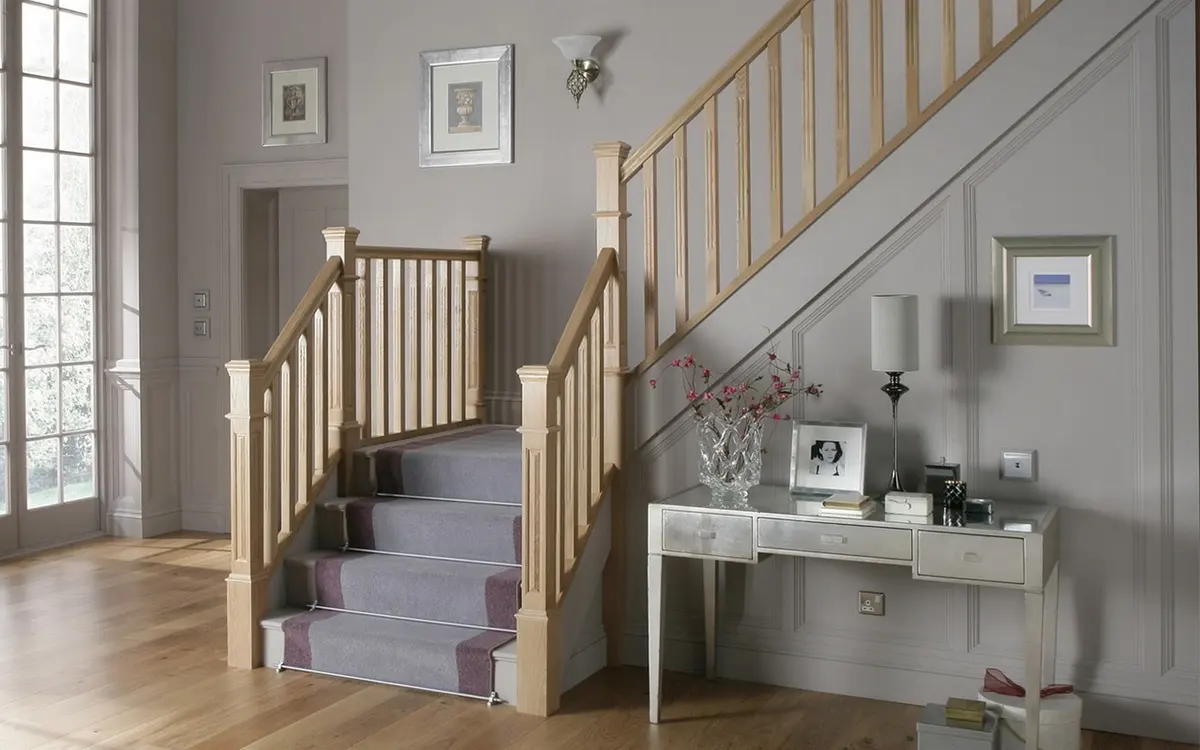
- Secure carpet. Carpet on stairs should be tight on every tread, over a thin, dense pad, so it does not shift under a foot
- Good lighting and rails finish the job, and are worth adding when the stairs are being redone
Our stair flooring guide covers carpet, hardwood and vinyl plank on stairs in more detail.
Room by room
- Kitchen, living areas and hallways: luxury vinyl plank, matte and textured, running continuously where possible
- Bedrooms: low, dense carpet on a thin, firm pad, or vinyl plank if someone uses a wheelchair or walker
- Entry: vinyl plank with a low-profile, non-slip mat. Our entryway flooring guide covers winter salt and slush
- Stairs: secure carpet or a hard stair with contrasting nosings
- Basement: if it is used regularly, the same rules apply, and the basement flooring guide covers moisture
Planning the project
New flooring is a good moment to make a house easier to live in, because the old floor is already coming up. If you are replacing floors with a long-term stay in mind, it is worth doing the whole main level at once, so the floor is continuous and the transitions are planned together.
The practical side matters too, particularly for an older homeowner. Our project pricing includes removal of the old floor and standard furniture moving on most projects, and how to prepare for installation day covers what to clear beforehand. How long installation takes can help in planning where to stay or which rooms to use while the work is done.
For budgeting, 500 square feet of luxury vinyl plank installed through Highmark runs $2,500 to $7,500 depending on quality level, and carpet $1,750 to $5,000. Our pricing page has the full ranges, and 0% financing is available through Synchrony Home on approved credit.
The short version
- Luxury vinyl plank, matte and textured, through the main living areas
- Low, dense carpet on a thin, firm pad if you want carpet in the bedroom
- As few transitions as possible, and flush or gently ramped where they remain
- No loose rugs, or rugs on non-slip pads with flat edges
- Contrast at stair edges and no busy patterns on stairs
If you are planning floors for yourself or a parent, book a free in-home estimate. We bring samples to the home, check the floor heights and doorways, and recommend a floor that suits the way the house will be lived in for years to come.