Laminate is a floor with a very tough top and a vulnerable middle. The wear layer on a good laminate is harder than a hardwood finish and harder than most vinyl, so it shrugs off the everyday traffic that marks other floors. Underneath it is a fiberboard core, and fiberboard that gets wet enough to swell does not shrink back.
Almost everything about cleaning laminate follows from those two facts. Keep grit off the top, keep water out of the middle, and a laminate floor will look good for a long time.
What you are cleaning
A laminate plank is a printed image of wood under a clear, very hard wear layer, on a high-density fiberboard core. The planks click together and float on an underlayment, with a gap at every wall so the floor can move with the seasons.
The weak points are the seams between planks and the edges around the room. That is where water gets in, and it is where you see the damage when it does: an edge that lifts and swells into a ridge. How to choose laminate flooring explains how modern water-resistant laminates seal those edges, and why that protection still comes with a time limit.
The routine: dry first, barely damp second
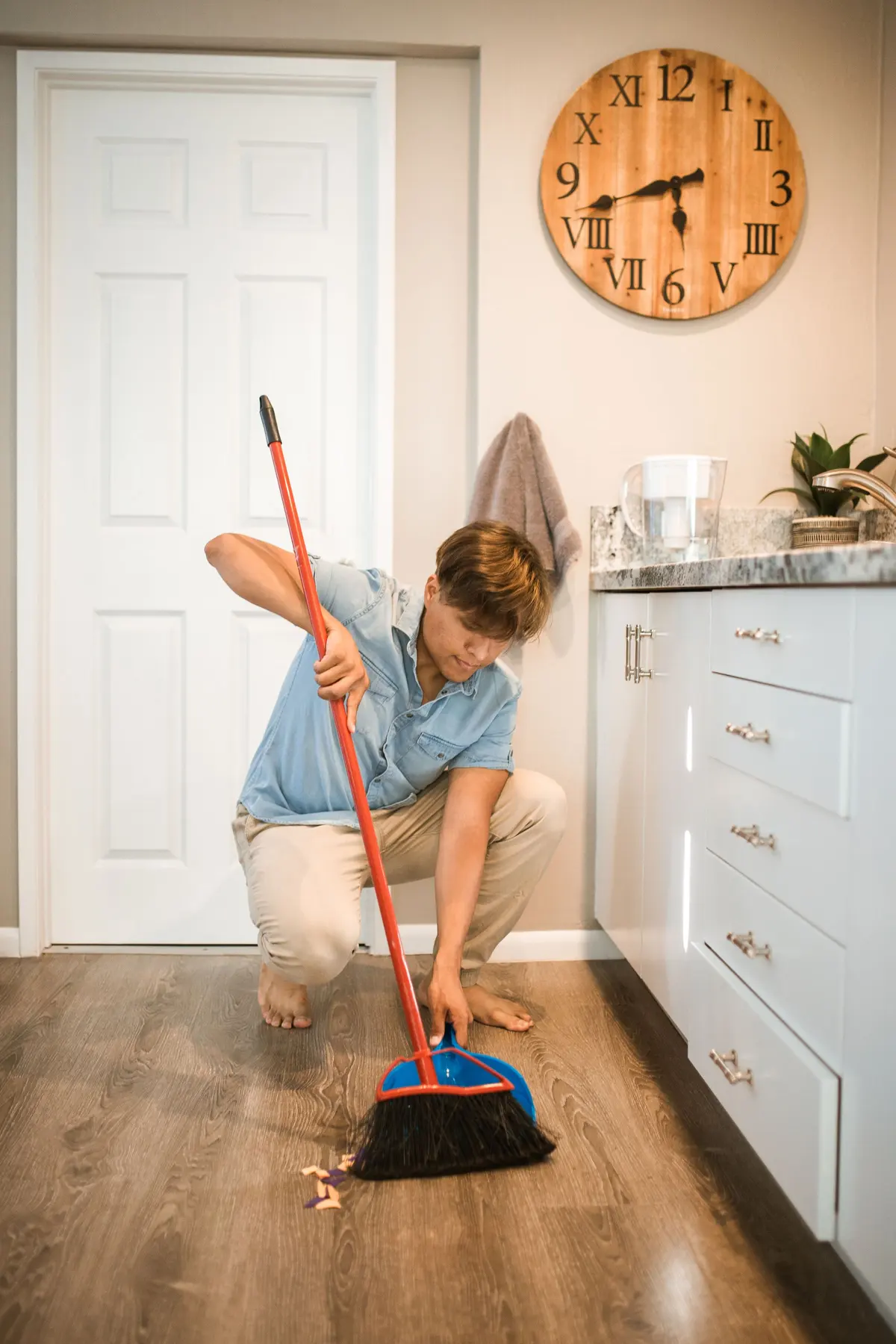
- Sweep, dust mop or vacuum a few times a week where people come in and cook, and weekly everywhere else
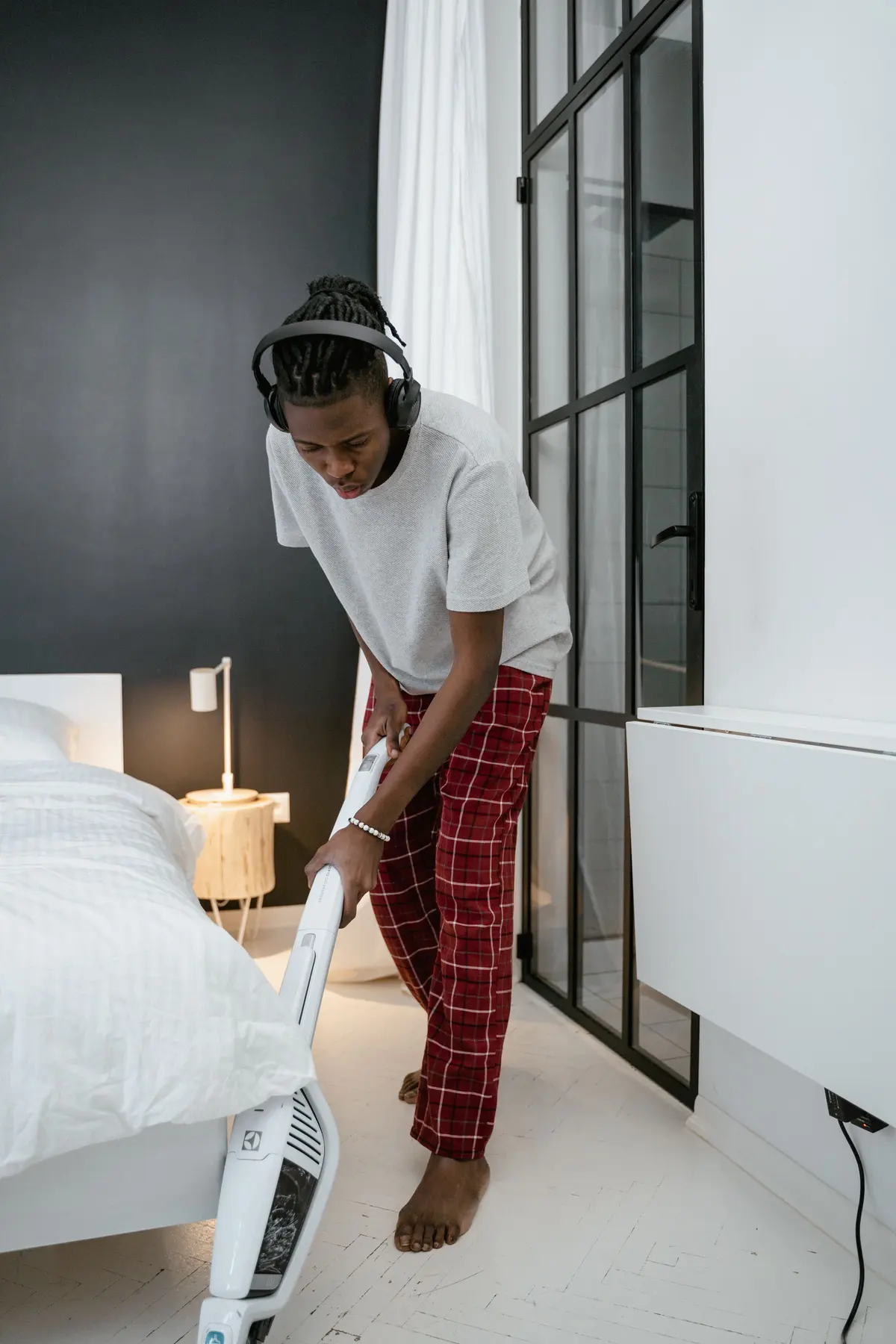
- If you vacuum, use a hard-floor head or turn the beater bar off, so a spinning brush does not throw grit across the surface
- Mop only when the floor actually needs it, with a cleaner made for laminate or one the manufacturer of your floor approves
- Use a microfiber flat mop that is barely damp. If you can see water standing on the floor behind the mop, it is too wet
- Wipe up spills straight away, and dry the area afterward rather than leaving it to air dry
A spray bottle and a flat mop are the right tools for laminate. A bucket and a string mop are the wrong ones, because they put far more water on the floor than the job needs, and the excess runs into the seams.
Grit does the slow damage
The hard wear layer resists scratches well, but nothing is immune to sand. Fine grit carried in on shoes gets ground into the surface underfoot every day, and over a few years it dulls a path from the back door to the kitchen.
The cheapest fix is at the door. A coarse mat outside and a second one just inside catches most of it before it reaches the floor. In a Central Ohio winter that inside mat also catches the slush and road salt that would otherwise melt on the planks.
Salt residue on laminate looks like a white haze. Take it off with the laminate cleaner on a damp microfiber pad, then dry the floor. Do not flood it with water to dissolve the salt, which trades a cosmetic problem for a real one.
What to keep away from laminate
Steam mops. Steam is hot, pressurized moisture, which is exactly what drives water into the seams of a fiberboard floor. Many laminate manufacturers rule it out entirely. If you change one habit, make it this one.
Wet mopping. The same problem without the heat. Water that sits on a seam long enough is how a water-resistant floor becomes a swollen one.
Wax, polish and oil soap. Laminate has a factory finish that does not need feeding or polishing, and it cannot absorb any of these. They sit on top as a film that looks good for a day, then smears, dulls, holds dirt and gets slippery.
Abrasive cleaners and scouring pads. Powdered cleansers, steel wool and stiff scrub brushes can dull the wear layer. For a stubborn mark, use a soft cloth and a little of the right cleaner, and give it a minute to work.
Home remedies. Vinegar, dish soap and all-purpose cleaners are often recommended online. Some leave residue and some are not approved by the flooring manufacturer. The cleaner your floor's manufacturer recommends is the one that keeps the warranty on your side.
Scratches, chips and dents
Laminate is harder to scratch than vinyl or hardwood, but its edges can chip if something heavy is dropped on them, and a deep gouge goes through the printed layer.
- Small scratches and chips can often be hidden with a color-matched touch-up kit or repair marker made for laminate
- Laminate cannot be sanded and refinished. There is no solid wood under the image to sand back to
- A badly damaged plank can be replaced on a click-together floor without redoing the room, as long as there is matching material
That last point is the reason to keep the leftover box from your installation, stored flat in a dry closet rather than a garage or basement. Colors vary from one production run to the next and products get discontinued, so the planks from your own run are what make a repair disappear.
Felt pads under chair and table legs, a chair mat under a rolling desk chair, and lifting heavy furniture rather than dragging it prevent most of this in the first place.
When water does get in
A spill wiped up quickly is not a problem on a modern laminate. Water that sits is. The signs are edges that rise slightly at the seams, a plank that feels soft or spongy, or a ridge along a joint that was not there before.
Swollen laminate does not recover as it dries. The affected planks have to be replaced, and the more important question is whether the subfloor underneath stayed dry. If a dishwasher, washing machine or supply line leaks onto a laminate floor, get the water up immediately. If we installed the floor, call us. On a floating floor, planks can often be lifted so the subfloor dries out rather than having moisture sealed under it.
If the same room keeps seeing water, that is a sign it wants a different floor rather than more careful mopping. LVP versus laminate goes through which rooms suit which, and waterproof versus water-resistant explains why the labels are not the same promise.
Pets and kids
Laminate's hard top stands up well to claws, which is why it suits a dry room in a house with a cat or a well-trimmed dog. The risk with pets is liquid: an accident found late, under a piece of furniture, is exactly how laminate swells. Clean accidents up promptly and dry the spot. Our pet flooring guide covers which rooms are better given vinyl instead.
Crayon, marker and scuffs usually come up with the laminate cleaner on a soft cloth. Go carefully with melamine sponges, which are a mild abrasive, and test one somewhere out of sight first.
The short version
Sweep often, mop rarely and barely damp, stop grit and slush at the door, and keep steam, wax, oil soap and standing water away from it. That is the whole maintenance plan for a laminate floor. If you have vinyl plank in other rooms, how to clean luxury vinyl plank covers the small ways its care differs.
If your laminate is already swollen at the seams or past saving, or you are deciding between laminate and vinyl for a room, book a free in-home estimate. We bring samples of both to the house and tell you honestly which rooms each one suits.