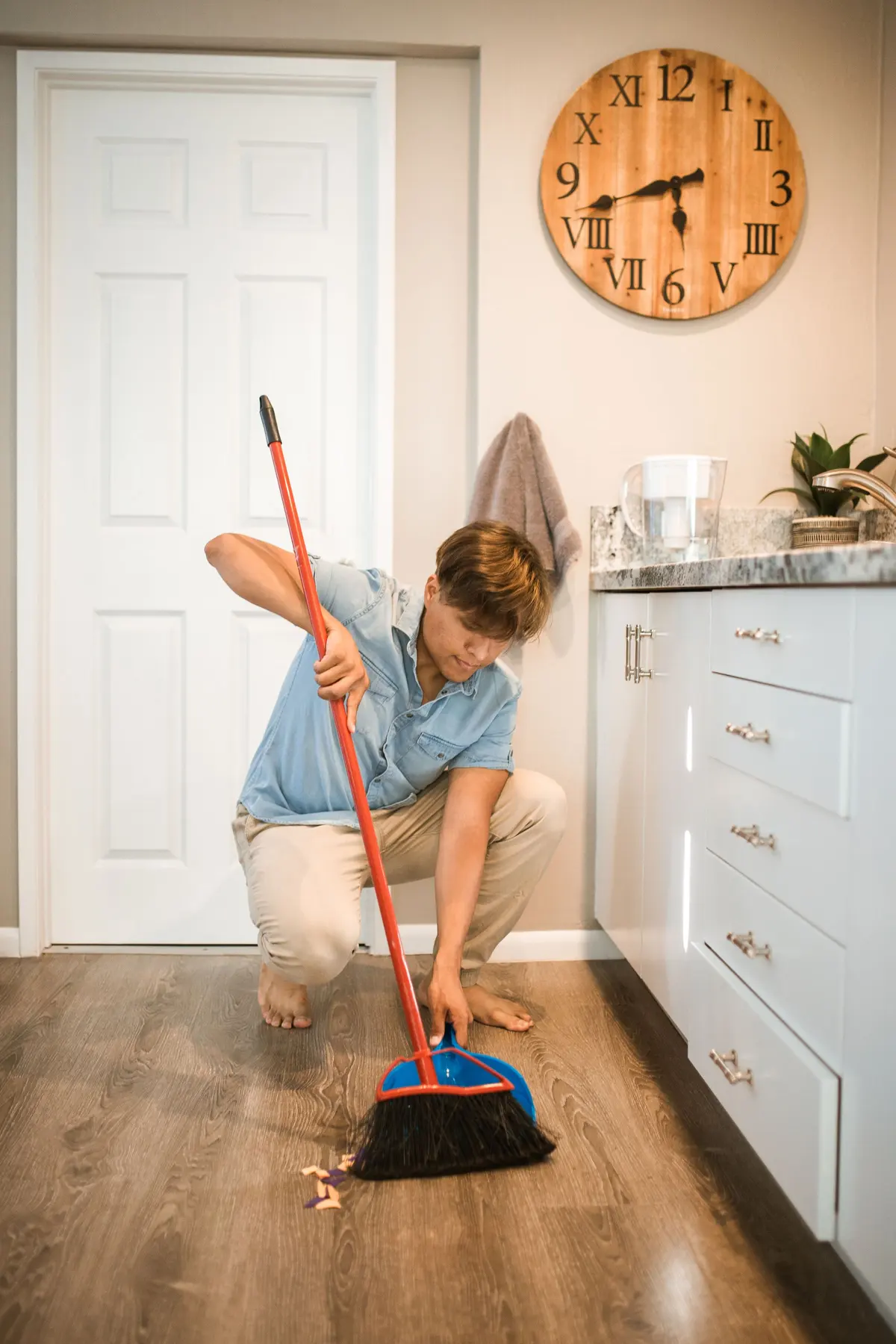
Luxury vinyl plank is the easiest floor in the house to look after, which is exactly why it gets looked after badly. Because it shrugs off a spill, people assume it will shrug off anything, and reach for whatever is under the sink. A lot of the wear we see on vinyl floors a few years in did not come from the dog or the kids. It came from the cleaning.
Here is how to clean luxury vinyl plank so it still looks the way it did on the day it went down, and the handful of habits that wear it out early.
What you are actually cleaning
The top of a vinyl plank is a clear wear layer over a printed image of wood. That wear layer takes all the traffic, and on most products it carries a factory finish that sets the sheen, whether that is low-gloss or matte. Everything in this guide is about protecting that one layer.
It matters because vinyl cannot be sanded and refinished the way hardwood can. Once the wear layer is worn through in a traffic lane, the print underneath starts to go, and the only fix is a new plank. The good news is that the wear layer is tough, and what wears it down is predictable. How to choose luxury vinyl plank explains how thick a wear layer each room needs.
The routine: sweep, then damp mop
- Sweep, dust mop or vacuum a few times a week in the kitchen and entryways, and weekly everywhere else
- If you vacuum, turn the beater bar off or use a hard-floor head, because a spinning brush throws grit across the surface
- Damp mop weekly, or whenever the floor looks dull, with a pH-neutral cleaner made for vinyl or resilient floors
- Wring the mop out well: damp, not wet
- Wipe up spills when they happen, sticky ones especially, before they get walked through the house
That is genuinely all of it. A microfiber flat mop and a spray bottle of the right cleaner do a better job than a bucket and a string mop, because they put down less water and leave less residue behind.
Grit is the real enemy
The thing that dulls a vinyl floor is not water and it is not pets. It is sand and fine grit carried in on shoes and ground into the surface underfoot, a little every day, like very fine sandpaper. You can usually see it as a hazy path from the back door to the kitchen sink.
That is why sweeping matters more than mopping, and why the first few feet inside each door matter more than the rest of the floor. A good mat outside and another just inside catches most of it before it ever reaches the planks. Our entryway and mudroom guide covers the floor and the mats at the door.
In a Central Ohio winter, add road salt to the grit. Salt tracked in on boots dries into a white film that can look like the floor has been damaged. Usually it has not. It is residue sitting on top, and a pH-neutral cleaner followed by a pass with plain water takes it off. Left for a whole season, though, it gets ground in with everything else.
Five habits that ruin vinyl plank floors
Steam mops. Heat and pressurized moisture are exactly what a vinyl floor is not built for. Steam can drive water into the seams, soften the adhesive on a glue-down floor, and make planks cup or gap. Many manufacturers warn against steam cleaning outright. If you only change one habit, make it this one.
Oil soaps, waxes and shine products. Vinyl does not need to be fed or polished. Oil soaps and wax-based products leave a film that looks good for a day, then holds onto dirt, turns cloudy and gets slippery. Built up over a year, it produces a floor that looks worse the more you clean it, and the film has to be stripped off to recover.
Harsh chemicals and abrasives. Bleach, ammonia, powdered cleansers, scouring pads and steel wool can etch or dull the finish on the wear layer. For a stubborn mark, a soft cloth and a little more of the neutral cleaner, left to sit for a minute, usually does it.
Rubber-backed mats and rugs. This one surprises people. The rubber or latex backing on many mats reacts with vinyl and leaves a yellow or brown stain that does not come out. Use mats labeled safe for vinyl floors, with a woven or non-staining backing. It matters most at exactly the doors where you need a mat most.
Dragging heavy things. A refrigerator walked out on its feet, a dining chair dragged back from the table a thousand times, a desk chair on hard casters. Vinyl is softer than laminate, and a heavy point load leaves a dent that stays. Felt pads on chair and table legs, soft casters or a chair mat under a desk, and a sheet of plywood or an appliance dolly whenever something heavy has to move.
Sunlight and heat
Strong afternoon sun through a south- or west-facing slider does two things to a vinyl floor over the years: it can fade the print, and it heats the planks, and vinyl expands as it warms. Rigid-core products handle this far better than older flexible vinyl did, but a floor in a sunroom or in front of a large glass door still benefits from blinds or curtains drawn through the hottest part of a July afternoon. Does sunlight fade floors? covers what to choose for a sunny room.
Pets and kids
Pet accidents do not hurt the plank itself, but clean them up promptly so they do not sit on a seam. Keep dog nails trimmed, which is the single best thing you can do for any floor in a house with dogs. Our pet flooring guide explains why vinyl is usually the right call for the rooms the dogs actually live in.
Crayon, marker and black shoe scuffs generally come up with the neutral cleaner and a soft cloth. Go carefully with melamine sponges, which are a fine abrasive, and try one somewhere out of sight first.
Water: waterproof plank, careful with the rest
A waterproof vinyl plank can sit in a puddle without harm. The seams, the edges along the wall and the subfloor underneath are a different matter, which is why a spill still gets wiped up and a leak still gets dealt with the same day. Waterproof and water-resistant are not the same promise, and knowing which one is in your house tells you how much room for error you actually have.
If a dishwasher, washing machine or water heater lets go, get the standing water up quickly. If we installed the floor, call us. On a floating floor, planks can often be lifted so the subfloor dries out rather than having moisture sealed underneath it.
When a plank does get damaged
A deep gouge or a crushed edge is not the end of the floor. On a click-together vinyl floor, a damaged plank can be replaced without redoing the room, as long as there is matching material.
That is the reason to keep the leftover box from your installation, and to keep it in a dry closet rather than a hot garage. Colors vary from one production run to the next, products get discontinued, and a plank from the same run is what makes a repair disappear.
The short version
Sweep often, mop damp with a pH-neutral cleaner, stop grit at the door, and keep steam, wax, oil soap and rubber-backed mats away from it. That is the whole maintenance plan for a luxury vinyl plank floor, and following it is the difference between a floor that looks tired in five years and one that still looks new in fifteen.
If your current floor is past saving, or you are weighing vinyl against something else for a room, book a free in-home estimate. We bring the samples to your house, and we are glad to talk through how each one is actually looked after before you choose.