A good hardwood floor can last for generations, and most of what decides whether it does happens in the first few years, in the cleaning cupboard and at the front door. The wood itself is rarely what wears. The finish on top of it is, and almost everything in this guide is about protecting that finish.
Here is the routine that keeps a wood floor looking right, the habits that quietly ruin it, and what to do about the things that will happen anyway.
What you are actually protecting
Every finished hardwood floor has a protective coat on top of the wood. On most floors today it is a factory-applied or site-applied urethane, which forms a clear, hard film. Some floors have a penetrating oil finish instead, which soaks into the wood rather than sitting on it.
The two need slightly different care, so it is worth knowing which you have. If you had the floor installed recently, the manufacturer's care instructions will say. As a rule, the cleaner the manufacturer recommends is the one to use, because many finish warranties are written around it.
The routine: dry first, then damp
- Sweep, dust mop or vacuum several times a week in entries and the kitchen, and weekly elsewhere. If you vacuum, use a hard-floor setting or turn the beater bar off, because a spinning brush drags grit across the finish
- Damp mop every week or two, or when the floor looks dull, with a cleaner made for wood floors and the finish you have
- Wring the mop out hard. The mop should be barely damp. A microfiber flat mop with a spray bottle puts down far less water than a bucket and string mop
- Wipe up spills right away with a dry or slightly damp cloth
That is all a wood floor needs. More cleaning, with more water and stronger products, does not make it cleaner. It wears it out.
What damages a hardwood floor
Most damage to wood floors comes from a short list of habits:
- Standing water and wet mopping. Water that sits on wood or gets into the joints between boards makes the edges swell and cup. It is the fastest way to damage a wood floor
- Steam mops. They push hot moisture into the seams and can cloud or break down the finish. Most wood flooring manufacturers say not to use them
- Vinegar, ammonia and all-purpose cleaners. Acidic and alkaline cleaners dull a urethane finish over time
- Oil soaps, waxes and "shine" products on a urethane floor. They leave a residue that builds up, attracts dirt, looks hazy, and can stop a fresh coat of finish from bonding later
- Grit. Sand and fine dirt on shoes act like sandpaper, a little at a time, and leave a dull path from each door
- Furniture without pads, and the wrong rolling chair. Dragged chairs and hard plastic casters scratch and dent
- High heels and unclipped claws. A small heel concentrates a person's whole weight onto a very small area and can dent even the hardest species
Protecting the floor day to day
- Mats at every outside door, one outside and one just inside, to catch grit before it reaches the floor. In a Central Ohio winter they also catch road salt, which dries into a white film
- Felt pads under every chair and table leg, replaced when they wear thin or collect grit
- Soft casters or a chair mat under any desk chair that rolls
- Rugs with a backing safe for wood finishes. Some rubber and vinyl rug backings can discolor a finish, so check before you put one down
- Lift heavy furniture rather than dragging it, and use furniture sliders made for hard floors when you must slide something
- Keep pets' claws trimmed. Our flooring guide for pets covers which species and finishes hold up best with dogs
Sun and color change
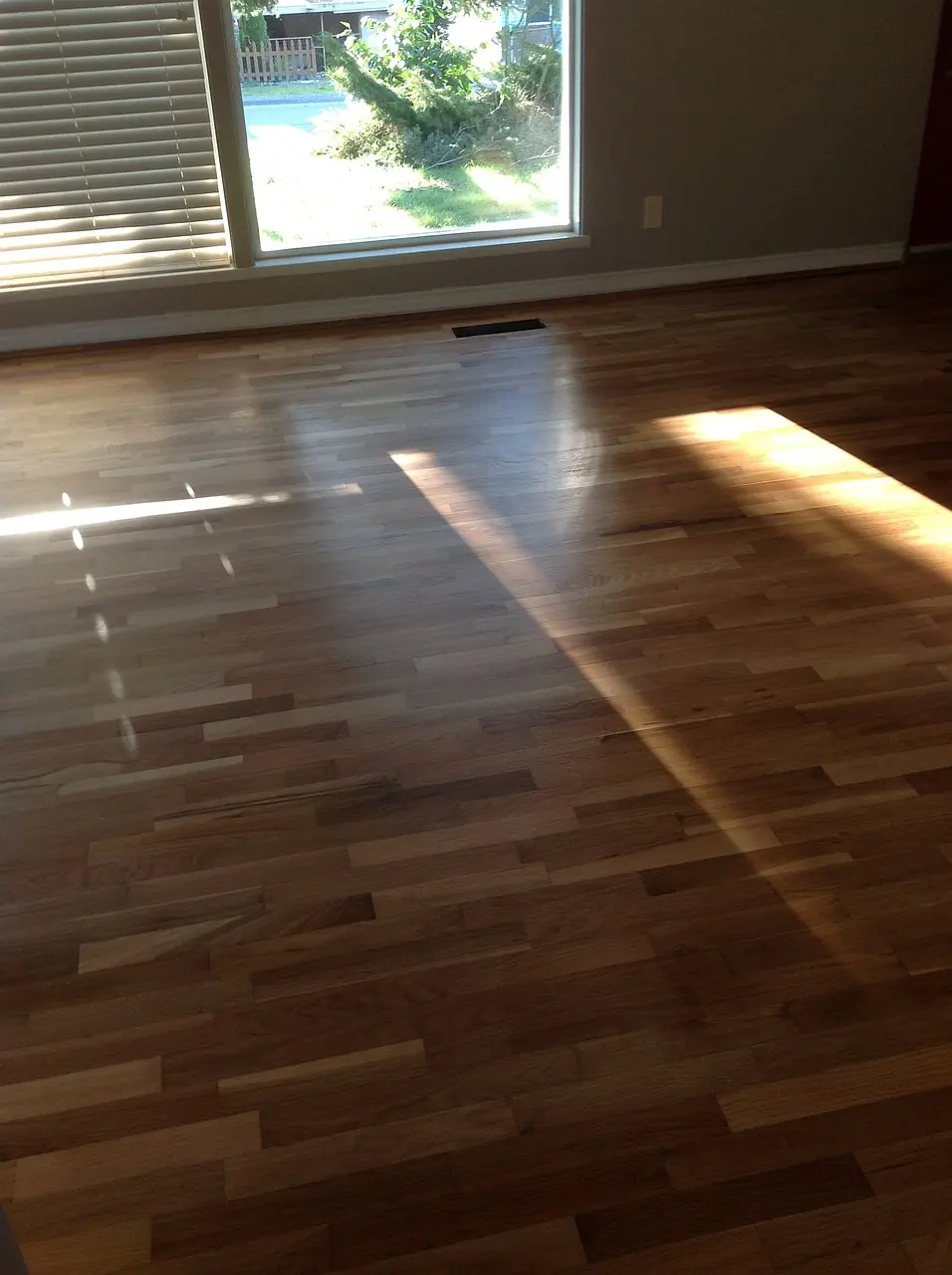
Wood changes color in light. Cherry and walnut change most, but every species shifts over time, and a rug that stays in one place for a year can leave a lighter or darker rectangle when it moves. Moving rugs and furniture around now and then, and using blinds or curtains on the sunniest windows, keeps the color even. Choosing a hardwood species covers how each wood ages, and does sunlight fade floors? explains what light does to every type of floor.
Humidity: the part most people miss
Wood takes on and gives off moisture with the air around it. In Central Ohio the indoor humidity swings hard between a humid summer and a dry, furnace-heated winter, and the boards swell and shrink with it. Small gaps between boards in January that close again by June are normal. Large gaps, or edges that cup up, are the floor telling you the swing is too big.
The guidance from the wood flooring industry, and a condition in most hardwood warranties, is to keep the house between about 30 and 50 percent relative humidity all year round. In practice that usually means a humidifier on the furnace in winter and air conditioning or a dehumidifier in summer. Why hardwood floors gap in winter explains what is normal and when to worry.
When something goes wrong
- Light surface scratches in a urethane finish are usually in the finish, not the wood, and often become hard to see with a manufacturer's touch-up product or simply with time
- Deeper scratches and dents that reach the wood can be filled or colored to blend in
- A damaged board in a nailed or floating floor can often be replaced individually, which is one good reason to keep a box of leftover boards from the install
- A worn, dull finish across a whole traffic lane means the finish needs renewing. A light screen and recoat, or a full sand and refinish, is a job for a refinishing specialist. We install floors rather than refinish them
New floors: the first few weeks
A newly installed floor with a site-applied finish needs time to cure, and the finisher will give a schedule for light foot traffic, furniture and rugs. A prefinished floor can usually be walked on and furnished straight away, though it is still worth waiting before putting rugs down if the manufacturer asks. Either way, the felt pads should go on before the furniture goes back.
Is it time for a new floor?
Care keeps a good floor good. It cannot turn a floor that has been cupped by water, worn through to bare wood across the house, or laid over a failing subfloor into a sound one. If you are at that point, or looking at hardwood for rooms that do not have it yet, engineered versus solid hardwood is the place to start. For hardwood flooring installation in Licking County or the Columbus area, book a free in-home estimate. We bring samples to the house and check the subfloor and moisture before recommending anything.